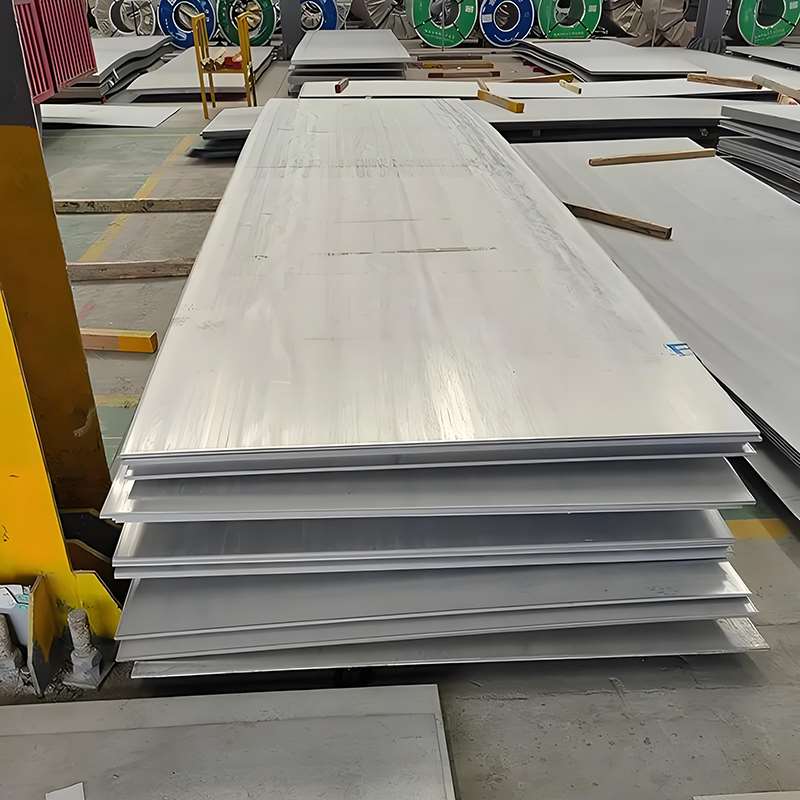
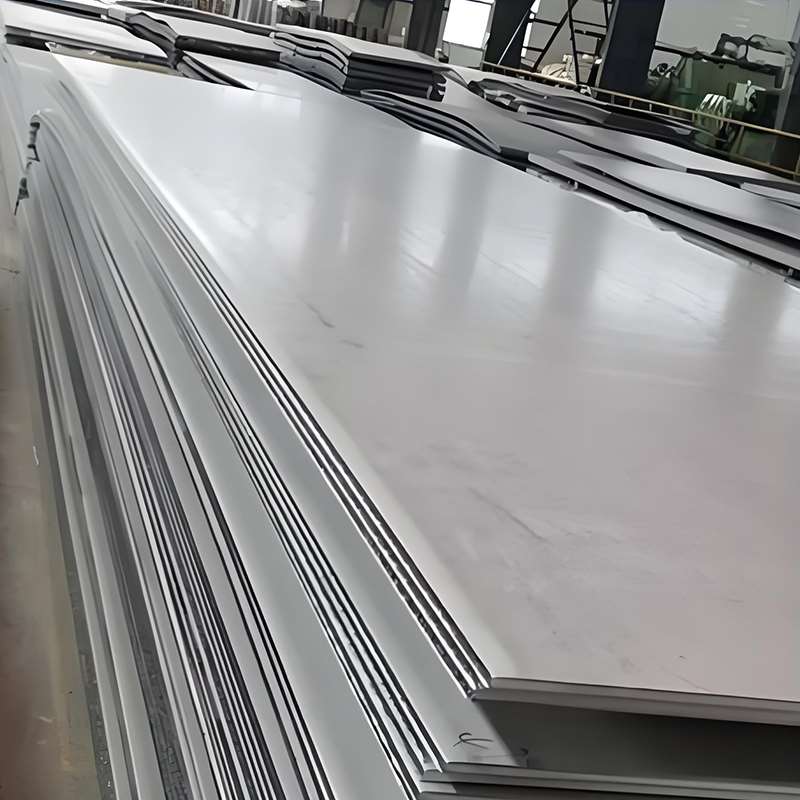
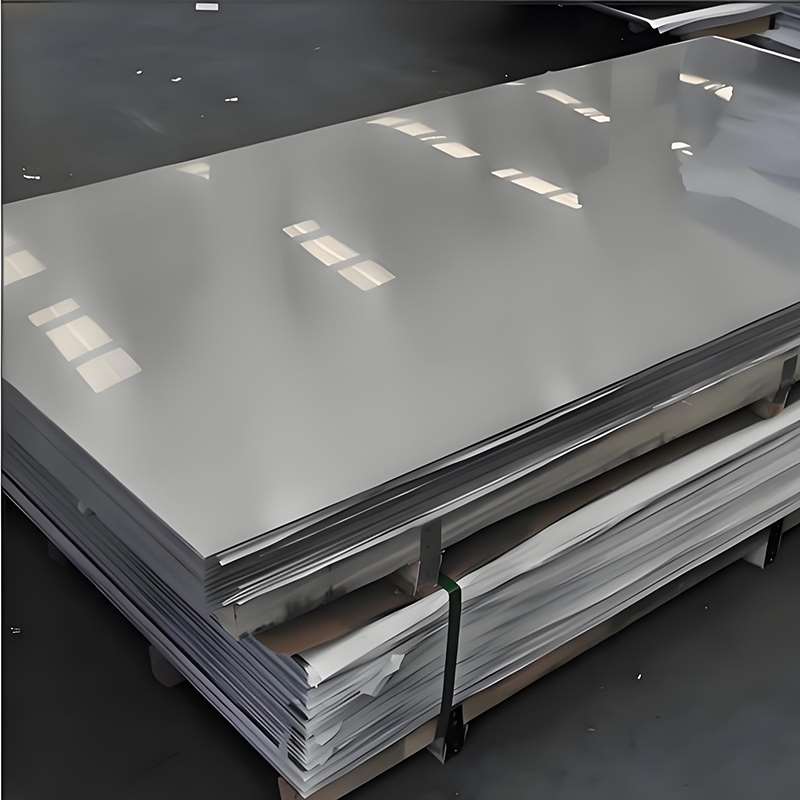
I. Introduction to Nickel-Based Alloy Plates
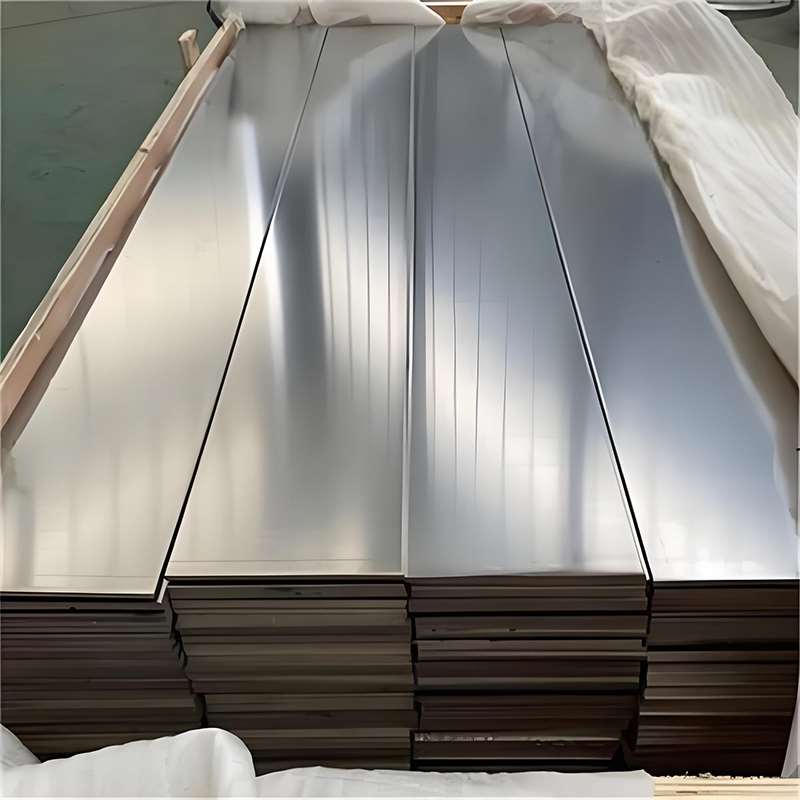
Nickel-based alloy plates, commonly referred to as nickel alloy plates, are austenitic alloy materials with nickel (Ni) as the primary element, typically containing more than 50% nickel. They are alloyed with elements such as chromium, molybdenum, iron, copper, and tungsten to achieve enhanced performance.
They can maintain excellent mechanical strength and corrosion resistance in high-temperature environments ranging from 600°C to 1000°C, highly corrosive media, and conditions involving high cyclic stress. Their performance is significantly superior to that of conventional stainless steels and duplex stainless steels.
Key Performance Characteristics
Corrosion Resistance:
Nickel-based alloys offer excellent resistance to acids such as sulfuric acid, hydrochloric acid, and hydrofluoric acid, as well as strong alkalis such as molten caustic soda. They also provide strong resistance to chloride-induced stress corrosion cracking (SCC).
High-Temperature Strength and Oxidation Resistance:
At elevated temperatures, nickel-based alloys can form a dense protective oxide film, providing excellent resistance to creep and oxidation.
Formability and Weldability:
With a face-centered cubic (FCC) crystal structure, nickel-based alloys have good ductility and can be manufactured into plates of various thicknesses through hot rolling, cold rolling, and common welding processes.
II. Common Classifications and Typical Grades
| Alloy System | Representative Grades (UNS / Brand) | Main Characteristics |
|---|---|---|
| Pure Nickel Series | Nickel 200 / 201 (N02200 / N02201) | Excellent resistance to strong alkalis, such as caustic sodium and potassium, with high electrical conductivity. |
| Nickel-Copper Series | Monel 400 / K-500 (N04400 / N05500) | Excellent resistance to seawater, hydrofluoric acid, and reducing environments. |
| Nickel-Chromium-Iron Series | Inconel 600 / 625 (N06600 / N06625) | Excellent resistance to high-temperature oxidation and outstanding fatigue resistance; performs well in high-temperature chloride-containing environments. |
| Nickel-Chromium-Molybdenum Series | Hastelloy C-276 / C-22 (N10276 / N06022) | Hastelloy alloys offering excellent resistance to strong acids, including mixed acids of nitric, hydrochloric, and sulfuric acids, as well as chloride-induced pitting and crevice corrosion. |
| Nickel-Iron-Chromium Series | Incoloy 800H / 825 (N08810 / N08825) | Good corrosion resistance to hot concentrated sulfuric acid and phosphoric acid, with a lower cost than high-nickel alloys. |
Brand Code Comparison Table:
| Grade | UNS No. | Alloy Type |
|---|---|---|
| Inconel 600 | N06600 | Nickel-Chromium-Iron Alloy |
| Inconel 625 | N06625 | Nickel-Chromium-Molybdenum Alloy |
| Inconel 718 | N07718 | Nickel-Chromium Alloy |
| Hastelloy B-2 | N10665 | Nickel-Molybdenum Alloy |
| Hastelloy C-276 | N10276 | Nickel-Molybdenum-Chromium Alloy |
| Incoloy 800 | N08800 | Nickel-Iron-Chromium Alloy |
| Incoloy 825 | N08825 | Nickel-Iron-Chromium-Molybdenum Alloy |
| Monel 400 | N04400 | Nickel-Copper Alloy |
| Monel K-500 | N05500 | Nickel-Copper Alloy |
III. Chemical Composition
| Grade | Main Chemical Elements |
|---|---|
| Inconel 600 | Ni, Cr, Fe, Mn, Si |
| Inconel 625 | Ni, Cr, Mo, Nb (Ta), Fe, Al, Ti |
| Inconel 718 | Ni, Cr, Fe, Nb (Ta), Mo, Ti, Al, Co |
| Hastelloy B-2 | Ni, Mo, Fe, Cr, Co, Mn, Si, C |
| Hastelloy C-276 | Ni, Mo, Cr, Fe, W, Co, V, Mn |
| Incoloy 800 | Ni, Fe, Cr, Al, Ti, C |
| Incoloy 825 | Ni, Fe, Cr, Mo, Cu, Ti, Al |
| Monel 400 | Ni, Cu, Fe, Mn, Si, C |
| Monel K-500 | Ni, Cu, Al, Ti, Fe, Mn |
IV.Nickel-Based Alloy Steel Plate Mechanical Properties
| Grade | Tensile Strength (MPa) | Yield Strength (MPa) | Elongation (%) |
|---|---|---|---|
| Inconel 600 | ≥550 | ≥240 | ≥30 |
| Inconel 625 | ≥760 | ≥345 | ≥30 |
| Inconel 718 | ≥1240 | ≥1030 | ≥12 |
| Hastelloy B-2 | ≥760 | ≥350 | ≥40 |
| Hastelloy C-276 | ≥690 | ≥283 | ≥40 |
| Incoloy 800 | ≥500 | ≥205 | ≥30 |
| Incoloy 825 | ≥586 | ≥241 | ≥30 |
| Monel 400 | ≥550 | ≥240 | ≥35 |
| Monel K-500 | ≥960 | ≥655 | ≥15 |
V. Manufacturing Process of Nickel-Based Alloy Plates
- Melting and Remelting:
A combination of vacuum induction melting (VIM) with electroslag remelting (ESR) or vacuum arc remelting (VAR) is used as a double- or triple-melting process. This helps reduce gas and impurity levels, ensure compositional uniformity, and eliminate segregation. - High-Temperature Breakdown and Surface Grinding:
After high-temperature homogenization annealing, the ingot undergoes forging or rough rolling to produce a flat slab. The slab surface is then thoroughly mechanically ground to completely remove surface defects. - Hot Rolling and Cold Rolling:
The slab is heated to a high-temperature range of 1150°C–1220°C and subjected to multiple passes of hot rolling. For medium and heavy plates, the material can be directly formed by hot rolling. Thin plates, however, undergo multiple passes of cold rolling after annealing and pickling to achieve precise thickness and an excellent surface finish. - Solution Heat Treatment:
The plates are heated to 1020°C–1180°C and held at temperature to fully dissolve the second phases. They are then water quenched or rapidly cooled using forced air to retain a single-phase austenitic structure, thereby achieving good corrosion resistance, ductility, and toughness. - Finishing and Inspection:
Oxide scale is removed by nitric-hydrofluoric acid pickling or mechanical polishing. After straightening and shearing, the plates undergo ultrasonic testing, mechanical property testing, and intergranular corrosion testing. Products that pass all inspections are approved for delivery.
VI. Heat Treatment
Heat treatment is an essential part of the manufacturing process for nickel-based alloy plates. It is used to refine the material’s microstructure and improve its mechanical properties, enhance corrosion resistance, reduce residual stresses generated during manufacturing processes such as rolling and cold working, and improve the stability and service performance of nickel-based alloy plates under actual operating conditions.
Depending on the specific nickel-based alloy grade and its intended application, common heat treatment methods include:
1. Annealing
Annealing improves the material’s ductility and toughness while reducing internal stresses generated during processing, allowing the material to achieve a more stable microstructure and more consistent properties.
2. Solution Annealing
Solution annealing optimizes the alloy’s microstructure through controlled heating and cooling, allowing the alloying elements to fully dissolve into the matrix. This helps maintain the material’s good mechanical properties and corrosion resistance.
3. Stress Relieving
Stress relieving is primarily used to reduce residual stresses generated during rolling, cold working, and other manufacturing processes. It helps improve the dimensional stability and long-term service performance of the plates.
4. Stabilizing Treatment
For certain nickel-based alloys, stabilizing treatment can improve microstructural stability during long-term exposure to elevated temperatures, reducing the impact of microstructural changes on material properties during prolonged high-temperature service.
VII. Surface Treatment of Nickel-Based Alloy Plates
1. Pickled Surface
Pickling is primarily used to remove oxide scale, heat-treatment oxides, and other surface impurities from the plates, resulting in a cleaner and more uniform surface. Pickled surfaces are suitable for industrial applications where a high level of surface cleanliness is required.
2. Polished Surface
Polishing reduces surface roughness and provides the plates with a flatter and smoother surface finish.
3. Cold-Rolled Surface
Cold-rolled plates generally offer better dimensional accuracy and a more uniform surface quality, making them suitable for applications with stringent requirements for thickness tolerances, dimensional accuracy, and surface condition. Depending on the specific alloy grade and applicable standard, cold-rolled products can also undergo appropriate heat treatment and surface treatment.
4. Hot-Rolled Surface
Hot rolling is a common manufacturing process for nickel-based alloy plates and is suitable for greater thicknesses and general industrial applications. An oxide layer typically forms on the plate surface after hot rolling, which can be further removed by pickling or other surface treatments according to product requirements.
5. Machined Surface
For products requiring further machining or special requirements for surface flatness and dimensional accuracy, machined surfaces can be provided. The specific machining method and tolerance can be determined according to the plate specifications and the customer’s drawings.
6. Customized Surface Treatment
Different applications have different requirements for the surface condition of nickel-based alloy plates. We can provide appropriate surface treatment solutions based on the customer’s specific application, processing requirements, surface roughness requirements, and project standards.
VIII. Frequently Asked Questions (FAQ)
1. What are the common grades of nickel-based alloy plates?
Common nickel-based alloy plates include Inconel 600, Inconel 625, Inconel 718, Hastelloy B-2, Hastelloy C-276, Incoloy 800, Incoloy 825, Monel 400, and Monel K-500, among others.
Different grades vary in their contents of alloying elements such as nickel, chromium, molybdenum, copper, and niobium, as well as in their corrosion resistance, high-temperature strength, and mechanical properties. Therefore, the appropriate alloy grade should be selected based on the operating temperature, corrosive media, and service conditions of the equipment.
2. What standards can nickel-based alloy plates be manufactured to?
Nickel-based alloy plates can be manufactured and inspected in accordance with relevant international standards such as ASTM, ASME, EN, DIN, JIS, and AMS, depending on the specific alloy grade and product requirements.
The applicable standards vary among different alloy grades. Therefore, when requesting a quotation, it is recommended to specify the Grade, UNS No., dimensions, heat treatment condition, and Applicable Standard so that the exact material requirements and technical specifications can be confirmed.
3. What Thicknesses Are Available?
Nickel-based alloy plates are available in a wide range of thicknesses. The commonly available range can cover approximately 0.5–150 mm, depending on the alloy grade, manufacturing process, heat treatment condition, and applicable standard.
For special thicknesses or project-specific plates, it is recommended to provide the required thickness, width, length, and quantity so that the available specifications and suitable production process can be confirmed.
4. Can the Dimensions Be Customized?
Yes. Nickel-based alloy plates can be supplied in customized dimensions according to the customer’s project requirements, including thickness, width, length, and certain special processing requirements.
For cut-to-size plates, it is recommended to provide the complete dimensions, quantity, material grade, and applicable standard when requesting a quotation. If the products require subsequent cutting, machining, or other processing, drawings or technical requirements can also be provided in advance so that the appropriate supply condition can be confirmed.
5. Do Nickel-Based Alloy Plates Require Heat Treatment?
Whether heat treatment is required depends on the specific alloy grade, product dimensions, manufacturing process, and applicable standard. Common heat treatment methods include annealing, solution annealing, and stress relieving.
Proper heat treatment can improve the material’s microstructure and mechanical properties, reduce residual stresses generated during processing, and help maintain good corrosion resistance.
The final heat treatment condition should be determined according to the specific Grade and Applicable Standard.