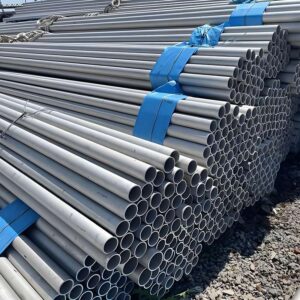
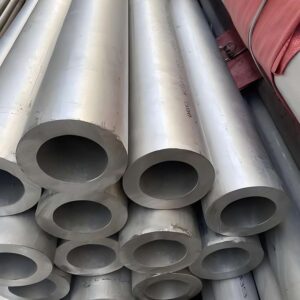
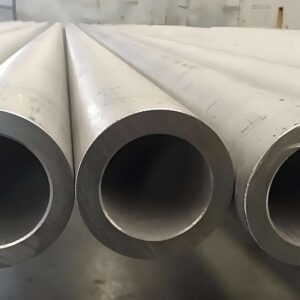

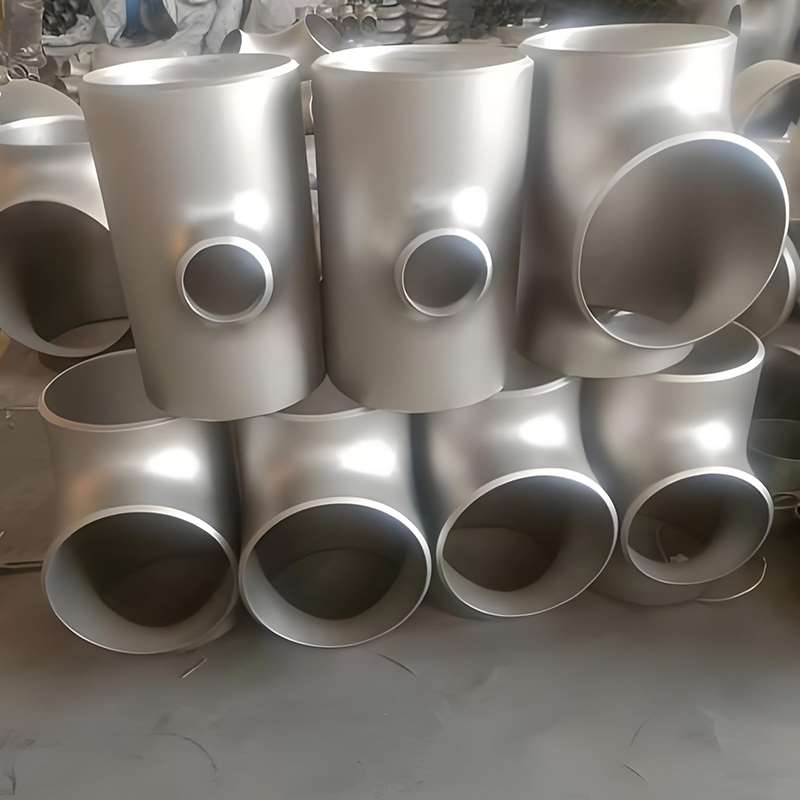
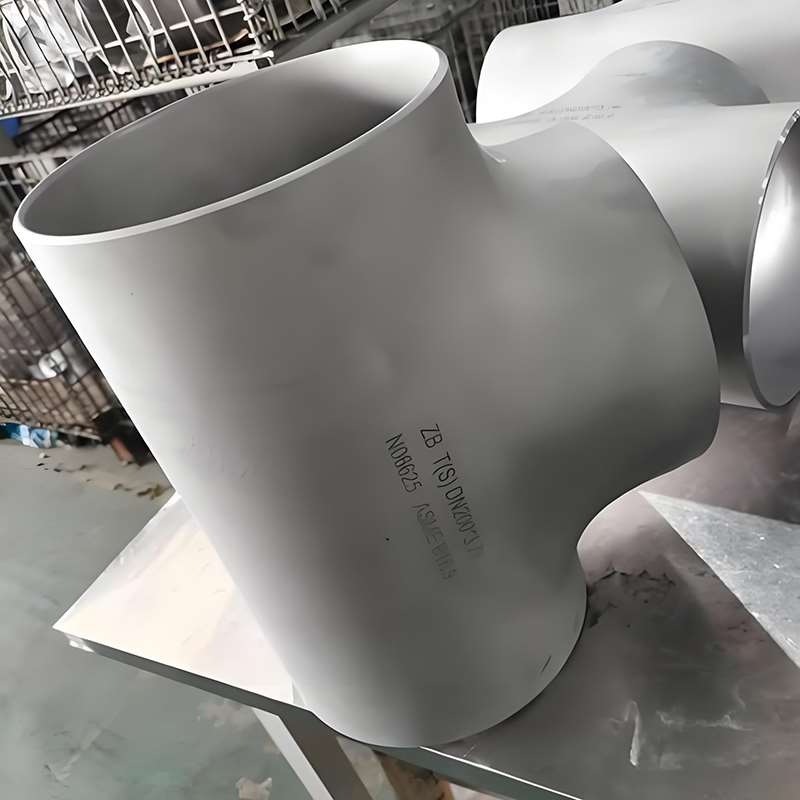

1. What Is a Nickel Alloy Tee and What Problems Does It Solve?
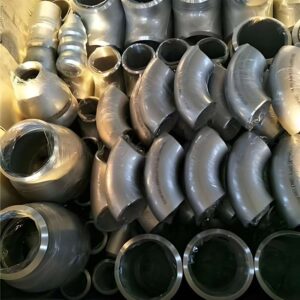
A nickel alloy tee is a pipe fitting made from nickel-based alloys, featuring a “T” shape with one inlet and two outlets. As a critical connection component in piping systems, its primary function is to control flow direction, enabling fluid splitting, merging, and the connection of branch lines.
In standard industrial settings, carbon steel or stainless steel tees often suffice. However, when piping systems encounter harsh operating conditions, standard materials fail rapidly. Nickel alloy tees offer a specialized solution designed to overcome these critical limitations:
Resistance to severe corrosion and pitting: Stainless steel is prone to pitting and stress corrosion cracking when exposed to media containing high concentrations of chloride ions, hydrofluoric acid, sulfuric acid, or hydrochloric acid. Nickel alloys offer superior chemical stability and form a robust passivation layer that blocks corrosive attack.
Withstanding extreme temperatures and pressures: While carbon steel is susceptible to oxidation, scaling, and creep at high temperatures, nickel alloys retain excellent mechanical strength and oxidation resistance in environments exceeding 600°C to 1000°C.
Ensuring zero leakage of hazardous media: As a junction where fluid changes direction, a tee is subjected to significantly higher levels of erosion and stress concentration than straight pipe sections. Using nickel alloys extends the fitting’s service life and prevents hazardous chemical leaks caused by fitting failure.
Typical application environments:
Strong acids, strong alkalis, and chloride-containing media: Widely used in highly corrosive environments such as high-concentration sulfuric and hydrochloric acid reactors and chloride-laden scrubbing towers.
High-temperature process piping: Utilized in cracking furnaces, ethylene units, ammonia synthesis reactors, and aerospace high-temperature gas flow systems.
Seawater and marine engineering: Designed for desalination plants, subsea pipelines, and offshore oil platforms, offering resistance to high-salinity seawater erosion and biofouling.
Chemical, petrochemical, and energy industries: Applications include heat transfer systems in nuclear power plants, flue gas desulfurization (FGD) units, and deep-well sour oil and gas extraction.
II. What Are the Common Types of Nickel Alloy Tees?
Nickel alloy tees are primarily used for branching and converging pipelines in piping systems. Depending on the dimensions of the branch and main pipes, the manufacturing process, and the connection method, nickel alloy tees can be classified into various types.
1. Equal Tee
In an equal tee, the main pipe and branch pipes have the same nominal size, such as NPS 4 × 4 × 4. All three connection ends are the same size, making it suitable for piping systems where the main pipe and branch pipes are of the same size.
This type of tee has a relatively simple structure and is primarily used in applications where a medium needs to be diverted from the main pipe to a branch pipe of the same diameter, or where two branch pipes of the same diameter need to be connected to the main pipe.
2. Reducing Tee
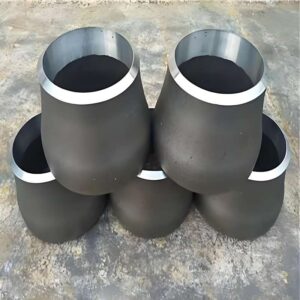
In a reducing tee, the branch pipe has a smaller diameter than the main pipe; for example, NPS 8 × 8 × 4. It allows for a direct connection between a main pipe and a branch pipe of different diameters, eliminating the need for additional reducers.
When a piping system requires a smaller branch pipe to extend from a larger main pipe, a reducing tee is typically the more appropriate choice. Specific dimensions should be determined based on the design flow rate, pressure, and connection sizes of both the main pipe and the branch pipe.
3. Seamless Tee
Seamless tees are typically manufactured from seamless nickel alloy tubes or alloy billets, and the body of the product has no longitudinal welds.
Seamless tees are commonly used in piping systems that require high material integrity, pressure resistance, and corrosion resistance. For projects involving high pressure, small diameters, or strict manufacturing quality requirements, seamless tees may be more suitable.
4. Welded Tee
Welded tees are manufactured by forming, assembling, and welding sheet metal or tubing. Compared to seamless tees, the welding process offers greater flexibility in the manufacture of large-diameter, special-size, and thick-walled products.
For large-scale industrial piping projects, the decision to use welded tees must be based on a combination of product dimensions, nickel alloy grades, design pressure, manufacturing standards, and project inspection requirements.
5. Butt-Weld Tee
A butt-weld tee is a common type of fitting in industrial piping systems. Its three ends are typically designed for butt welding and are connected to the pipes through welding.
This connection method creates a continuous pipe joint and is suitable for systems with high requirements for pipe密封性 and reliability, such as those in the chemical, oil and gas, energy, and offshore engineering industries.
III. What are the commonly used materials for nickel alloy tees?
| Material / Grade | Key Features | Common Applications / Environments |
|---|---|---|
| Nickel 200 | Commercially pure nickel with excellent resistance to caustic alkalis | Chemical processing, caustic alkali service |
| Nickel 201 | Low-carbon commercially pure nickel with good corrosion resistance | High-temperature and chemical processing |
| Alloy 400 | Excellent resistance to seawater and chloride environments | Marine, shipbuilding, chemical processing |
| Alloy 600 | Excellent resistance to high temperatures, oxidation, and corrosion | Chemical processing, heat treatment |
| Alloy 625 | High strength with excellent resistance to pitting and crevice corrosion | Marine, chemical processing, energy |
| Alloy 800 / 800H | High-temperature strength and excellent oxidation resistance | Furnace tubes, petrochemical, heat treatment |
| Alloy 825 | Good resistance to acidic and chloride-containing environments | Chemical processing, acid pickling, energy |
Important Note: Materials are not necessarily better simply because they are more expensive; rather, they should be selected based on the medium, temperature, pressure, and type of corrosion.
IV. Chemical Composition of Nickel Alloy Tees
| Nickel Alloy Grade | Ni (Nickel) | Cr (Chromium) | Mo (Molybdenum) | Fe (Iron) | C (Carbon) | Cu (Copper) | Other Major Elements |
|---|---|---|---|---|---|---|---|
| Nickel 200 | ≥99.0% | — | — | ≤0.40% | ≤0.15% | ≤0.25% | Mn, Si, S |
| Nickel 201 | ≥99.0% | — | — | ≤0.40% | ≤0.02% | ≤0.25% | Mn, Si, S |
| Alloy 400 | ≥63.0% | — | — | ≤2.50% | ≤0.30% | 28.0–34.0% | Mn, Si, S |
| Alloy 600 | ≥72.0% | 14.0–17.0% | — | 6.0–10.0% | ≤0.15% | ≤0.50% | Mn, Si, S |
| Alloy 625 | ≥58.0% | 20.0–23.0% | 8.0–10.0% | ≤5.0% | ≤0.10% | ≤0.50% | Nb + Ta, Co, Mn, Si |
| Alloy 800 | 30.0–35.0% | 19.0–23.0% | — | ≥39.5% | ≤0.10% | ≤0.75% | Al, Ti, Mn, Si |
| Alloy 825 | 38.0–46.0% | 19.5–23.5% | 2.5–3.5% | ≤3.0% | ≤0.05% | 1.5–3.0% | Ti, Al, Mn, Si |
V. Mechanical Properties of Nickel Alloy Tees
| Nickel Alloy Grade | Tensile Strength Rm (MPa) | Yield Strength Rp0.2 (MPa) | Elongation A (%) | Hardness (Typical) |
|---|---|---|---|---|
| Nickel 200 | ≥345 | ≥70 | ≥40 | ≤HRB 70 |
| Nickel 201 | ≥345 | ≥70 | ≥40 | ≤HRB 70 |
| Alloy 400 | ≥483 | ≥193 | ≥35 | ≤HRB 70 |
| Alloy 600 | ≥550 | ≥240 | ≥30 | ≤HRB 83 |
| Alloy 625 | ≥827 | ≥414 | ≥30 | ≤HRB 99 |
| Alloy 800 | ≥500 | ≥170 | ≥30 | — |
| Alloy 825 | ≥586 | ≥241 | ≥30 | — |
VI. Frequently Asked Questions About Nickel Alloy Tees
1. For which operating conditions are nickel alloy tees suitable?
- Nickel alloy tees are primarily used in piping systems that require high levels of corrosion resistance, high-temperature resistance, or material reliability. Common applications include chemical processing, oil and gas, petrochemicals, offshore engineering, seawater treatment, power generation, and other systems that transport corrosive media.
- To determine suitability, it is necessary to select the appropriate nickel alloy grade based on the transported medium, operating temperature, pressure, and potential for pitting, crevice corrosion, or stress corrosion—rather than selecting the material solely based on the industry name.
2. How to Select the Right Material for a Nickel Alloy Tee?
- First, determine the actual operating conditions of the pipeline before selecting the material. Key factors to consider include the transported medium, chloride or acid/alkali content, operating temperature, design pressure, and type of corrosion.
- Common materials include Nickel 200/201, Alloy 400, Alloy 600, Alloy 625, and Alloy 825. Different grades vary in corrosion resistance, strength, and high-temperature resistance; therefore, the selection should be based on specific operating conditions and applicable material standards.
3. What is the difference between an equal tee and a reducing tee?
- In an equal tee, the main pipe and branch pipe have the same diameter, such as NPS 6 × 6 × 6; in a reducing tee, the branch pipe has a smaller diameter than the main pipe, such as NPS 8 × 8 × 4.
- If the main pipe and branch pipe have the same diameter, an equal tee can be used; if a smaller branch pipe needs to be connected to a larger-diameter main pipe, a reducing tee is typically used. The final size should be determined based on the piping design and flow requirements.
4. According to which standards can nickel alloy tees be manufactured?
- When manufacturing nickel alloy tees, it is typically necessary to consider both pipe fitting dimensional standards and material standards. For example, dimensional and geometric requirements for butt-welded fittings can be based on ASME B16.9, while material requirements for nickel and nickel alloy fittings can be determined according to the relevant ASTM/ASME material standards, such as ASTM B366.
- The specific standard to be used should be determined based on the material grade, manufacturing method, pipeline design codes, and project technical requirements. When purchasing, clearly specify the required standard and version to avoid dimensional or performance discrepancies resulting from suppliers manufacturing to different standards.
5. What information is required when purchasing nickel alloy tees?
- Nickel alloy grade
Equal tee or reducing tee
Nominal size or outside diameter
Wall thickness / Schedule
Connection type
Manufacturing standard
Quantity
Design pressure and operating temperature
Conveyed medium
Inspection and NDT requirements
Required quality documentation
If the specific material cannot be determined, you can provide details such as pipe size, medium, temperature, pressure, and operating environment; the supplier can then assist in identifying the appropriate material and specifications.
6. What quality documentation and inspections are required for nickel alloy tees?
- Depending on project requirements, nickel alloy tees can be accompanied by documentation such as Material Test Certificates (MTCs), chemical composition test reports, mechanical property test reports, heat treatment records, dimensional inspection reports, and non-destructive testing (NDT) reports.
- For industrial projects with higher requirements, non-destructive testing (such as UT, PT, and RT) and specific pressure tests may also be required. If the purchase contract specifies EN 10204 3.1, this should be clearly stated at the order stage to ensure that the supplier provides the corresponding materials and inspection documentation as required.