I. What is a nickel alloy reducer? What problem does it solve in piping systems?
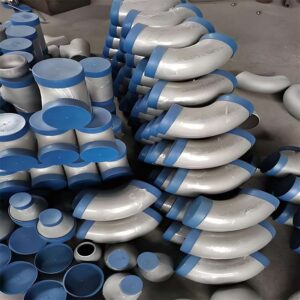
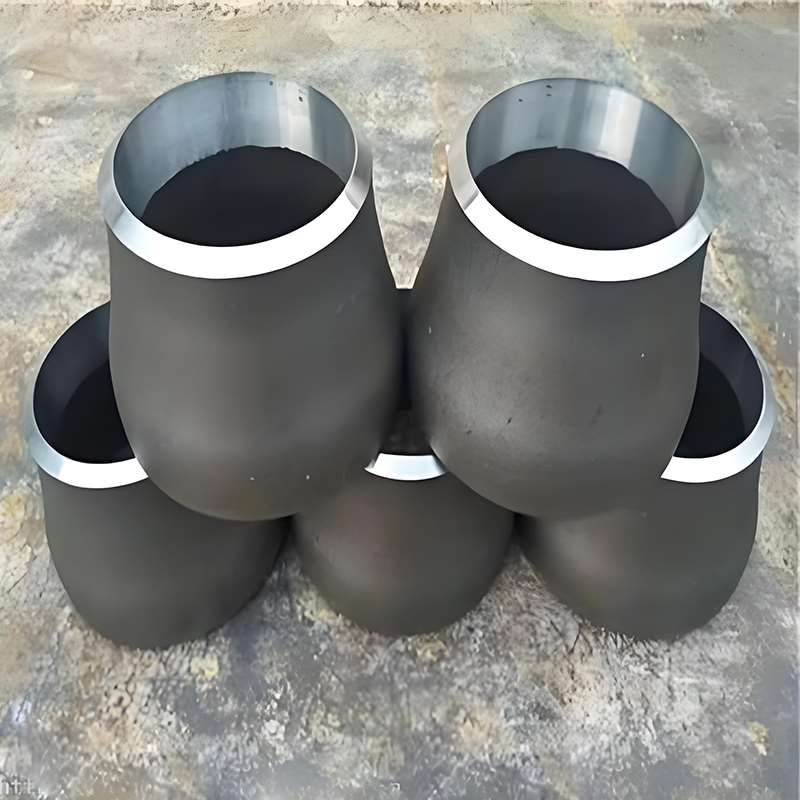
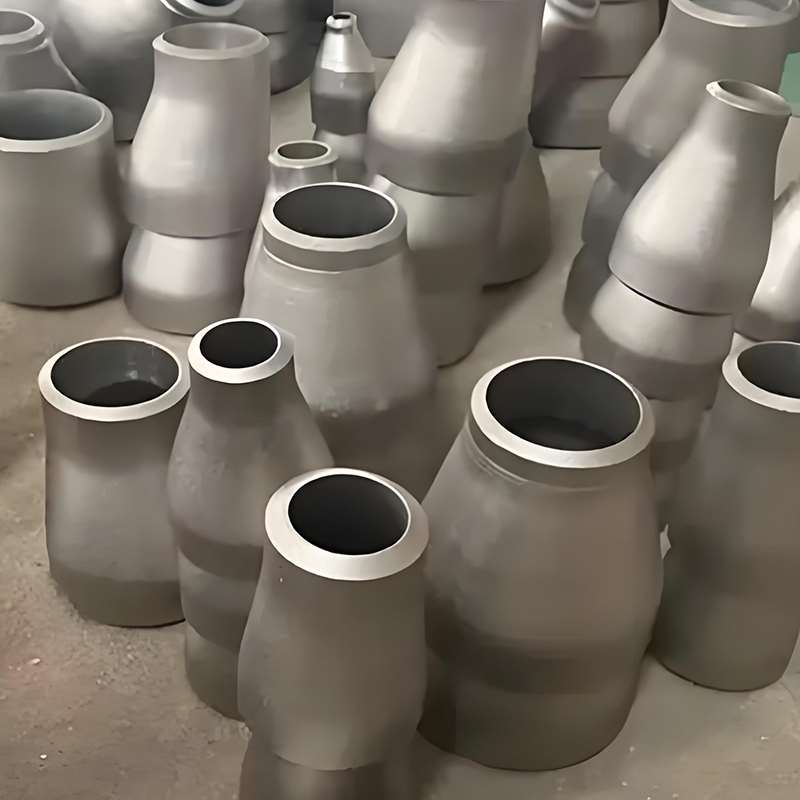
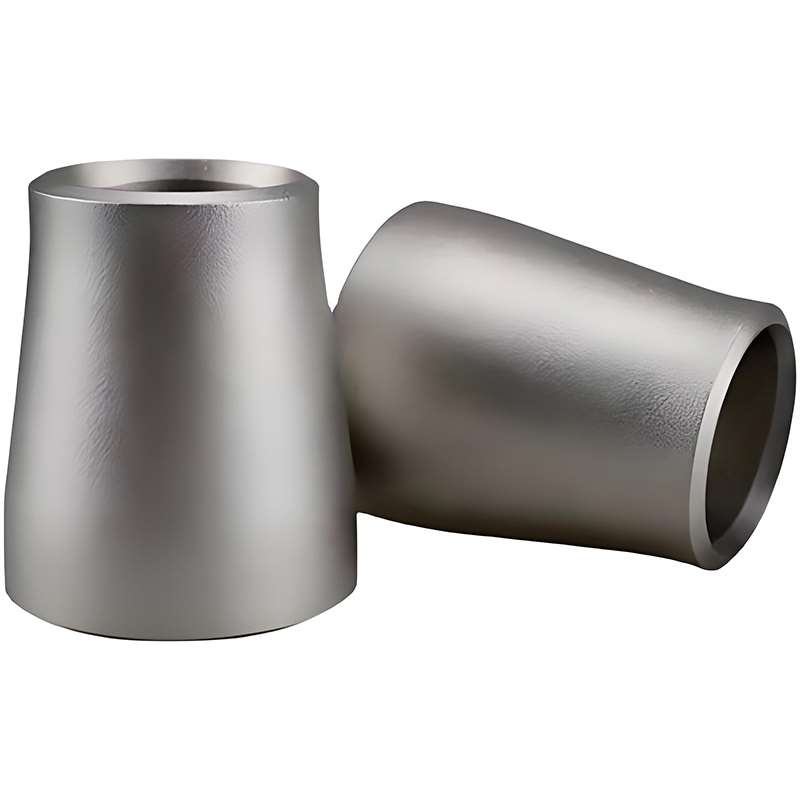
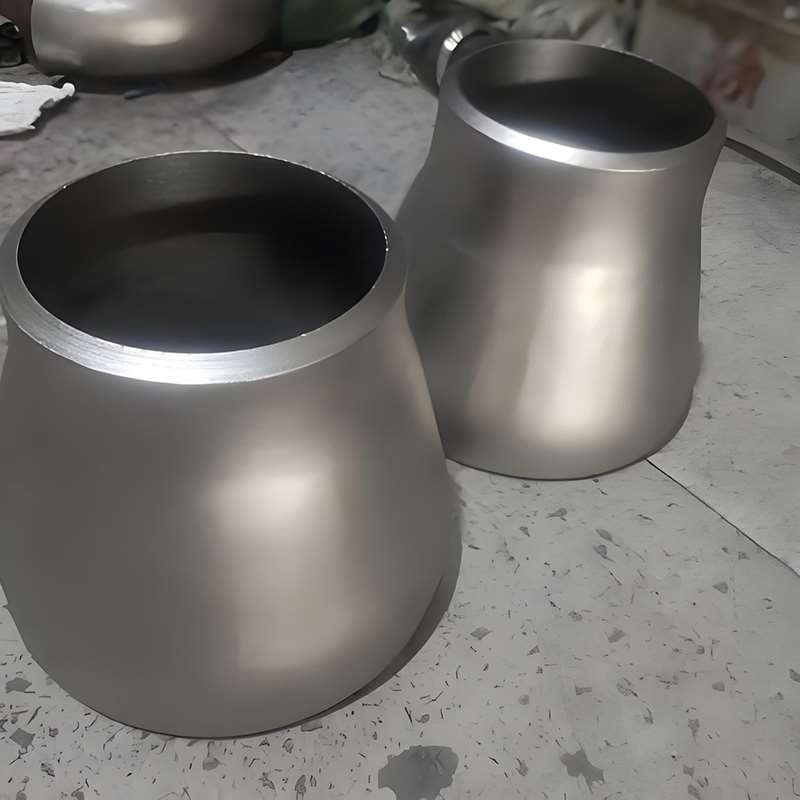
A nickel alloy reducer is a pipe fitting with different diameters at each end. It is primarily installed between pipes of different diameters to facilitate a change in pipe size.
For example, when connecting a DN100 pipe to a DN50 pipe, a DN100 × DN50 reducer is required.
Based on their structure, nickel alloy reducers are primarily classified as:
- Concentric Reducer: The centerlines of both ends align, making it suitable for general piping connections and systems requiring consistent centerline alignment.
- Eccentric Reducer: The centerlines of both ends do not align; it is typically used in applications where pipe elevation needs to be controlled, liquid accumulation must be prevented, or equipment layout requirements must be met.
Nickel alloy reducers are not simply standard reducers made of nickel alloy; their selection requires simultaneous consideration of material grades, service conditions, temperature and pressure, as well as forming and welding requirements.
II. What are the common materials used for nickel alloy reducers? How do you select the appropriate alloy grade?
The common materials for nickel alloy reducers mainly include the following categories:
| Common Alloy Grades | Material Characteristics | Common Applications / Environments |
|---|---|---|
| Nickel 200 / 201 | High nickel content with good resistance to caustic alkalis and corrosion | Caustic soda, chemical processing, food and electronics industries |
| Alloy 400 | Excellent resistance to seawater, chlorides, and hydrofluoric acid, with good strength | Marine engineering, chemical processing, petroleum, brine systems |
| Alloy 600 | Excellent resistance to high-temperature oxidation and various corrosive media | Chemical processing equipment, heat treatment, nuclear industry |
| Alloy 625 | Excellent resistance to pitting, crevice corrosion, and chloride corrosion, with high strength | Marine engineering, chemical processing, oil and gas, aerospace |
| Alloy 800 / 800H / 800HT | Good high-temperature strength and oxidation resistance | High-temperature furnaces, petrochemical equipment, heat exchangers |
| Alloy 825 | Good resistance to acidic media, chlorides, and stress corrosion cracking | Chemical processing, acid pickling, oil and gas, nuclear industry |
| Alloy 200 / 201 | Commercially pure nickel with excellent resistance to caustic alkalis | Caustic alkali service, chemical processing equipment |
| Alloy C-276 | Excellent overall corrosion resistance in a wide range of highly corrosive environments | Hydrometallurgy, flue gas desulfurization, chemical processing, wastewater treatment |
How to Choose the Right Alloy Grade?
When selecting nickel alloy reducers, the first step is to consider the actual operating conditions rather than simply choosing the material with the highest nickel content. We recommend focusing on the following points:
1. Consider the Transported Medium
- Different media have varying corrosive effects on alloys. For example, Nickel 200/201 may be considered for strongly alkaline environments; Alloy 400 or 625 may be considered for seawater and chloride environments; and Alloy 825 or C-276 may be considered for complex, highly corrosive environments.
2. Consider the operating temperature
- If the pipeline is exposed to high temperatures for extended periods, select an alloy with good high-temperature strength and oxidation resistance.
3. Consider pressure and dimensions
- Reducers are pressure-bearing fittings; verify that the material meets application requirements based on pipe diameter, wall thickness, design pressure, and temperature.
4. Consider project standards and welding requirements
- For engineering projects, also confirm the fitting standards, manufacturing methods, and welding requirements for connection to the main pipeline.
III. Table of Common Specifications and Dimensions for Nickel Alloy Reducers
| Nominal Size (Large End × Small End) | Large End OD | Small End OD | Common Wall Thickness Schedules | Common Length Range |
|---|---|---|---|---|
| NPS 1½ × 1 | 48.3 mm | 33.4 mm | SCH 10S–SCH 80S | 76–127 mm |
| NPS 2 × 1½ | 60.3 mm | 48.3 mm | SCH 10S–SCH 80S | 89–140 mm |
| NPS 2 × 1 | 60.3 mm | 33.4 mm | SCH 10S–SCH 80S | 89–140 mm |
| NPS 3 × 2 | 88.9 mm | 60.3 mm | SCH 10S–SCH 80S | 102–152 mm |
| NPS 3 × 1½ | 88.9 mm | 48.3 mm | SCH 10S–SCH 80S | 102–152 mm |
| NPS 4 × 3 | 114.3 mm | 88.9 mm | SCH 10S–SCH 80S | 127–178 mm |
| NPS 4 × 2 | 114.3 mm | 60.3 mm | SCH 10S–SCH 80S | 127–178 mm |
| NPS 5 × 4 | 141.3 mm | 114.3 mm | SCH 10S–SCH 80S | 140–203 mm |
| NPS 6 × 4 | 168.3 mm | 114.3 mm | SCH 10S–SCH 80S | 152–229 mm |
| NPS 6 × 3 | 168.3 mm | 88.9 mm | SCH 10S–SCH 80S | 152–229 mm |
| NPS 8 × 6 | 219.1 mm | 168.3 mm | SCH 10S–SCH 80S | 178–279 mm |
| NPS 8 × 4 | 219.1 mm | 114.3 mm | SCH 10S–SCH 80S | 178–279 mm |
| NPS 10 × 8 | 273.0 mm | 219.1 mm | SCH 10S–SCH 80S | 203–305 mm |
| NPS 10 × 6 | 273.0 mm | 168.3 mm | SCH 10S–SCH 80S | 203–305 mm |
| NPS 12 × 10 | 323.9 mm | 273.0 mm | SCH 10S–SCH 80S | 229–356 mm |
| NPS 12 × 8 | 323.9 mm | 219.1 mm | SCH 10S–SCH 80S | 229–356 mm |
| NPS 14 × 12 | 355.6 mm | 323.9 mm | SCH 10S–SCH 80S | 254–381 mm |
| NPS 16 × 14 | 406.4 mm | 355.6 mm | SCH 10S–SCH 80S | 279–406 mm |
| NPS 18 × 16 | 457.2 mm | 406.4 mm | SCH 10S–SCH 80S | 305–432 mm |
| NPS 20 × 18 | 508.0 mm | 457.2 mm | SCH 10S–SCH 80S | 330–457 mm |
| NPS 24 × 20 | 610.0 mm | 508.0 mm | SCH 10S–SCH 80S | 356–508 mm |
IV. Common International Standards for Nickel Alloy Reducers
| Standard | Main Application | Role in Nickel Alloy Reducing Tees |
|---|---|---|
| ASME B16.9 | Factory-made wrought butt-welding fittings | Specifies dimensions, end-to-end dimensions, tolerances, and other requirements for reducing tees |
| ASTM B366/B366M | Wrought nickel and nickel-alloy fittings | Specifies material requirements, chemical composition, mechanical properties, heat treatment, and manufacturing requirements for nickel-alloy fittings |
| ASME SB366 | Nickel and nickel-alloy fittings under the ASME material specification system | Commonly used as the material specification for nickel-alloy fittings in ASME-regulated projects |
| MSS SP-43 | Selected low-pressure, corrosion-resistant stainless steel and nickel-alloy fittings | May be applied to the dimensions and manufacturing requirements of relevant fittings for specific projects |
| EN / DIN Series Standards | European projects | Applicable fitting dimensions, materials, and inspection requirements are determined according to project specifications |
| Project Technical Specifications | Specific engineering projects | May impose additional requirements for material certificates, PMI, NDE, inspection, and other quality-control procedures |
V. Manufacturing Process for Nickel Alloy Reducers
Raw Material Inspection → Cutting → Forming → Heat Treatment → End Machining → Inspection → Packaging and Delivery
1. Raw Material Inspection
- Verify the nickel alloy grade, chemical composition, mechanical properties, and material certificates to ensure the material meets requirements.
2. Cutting
- Cut the material according to the requirements for the larger end, smaller end, wall thickness, and length of the reducer.
3. Forming
- The raw material is processed into a reducer with different diameters at both ends through cold or hot forming. The specific process is determined based on the alloy grade and dimensions.
4. Heat Treatment
- Heat treatment is performed in accordance with material and standard requirements to ensure the material meets the specified performance and microstructural requirements.
5. End Machining
- Both ends are cut, machined, and beveled to ensure that the dimensions and weld ends meet requirements.
6. Inspection
- Inspect the appearance, dimensions, wall thickness, and roundness, and perform non-destructive testing as required by the customer.
7. Final Inspection and Packaging
- After confirming that the material, specifications, and inspection results meet the requirements, proceed with marking, protection, and packaging.
VI. What Quality Inspections Are Required for Nickel Alloy Reducers?
1. Material Inspection: First, confirm “what material is being purchased.”
This is one of the most important inspection items for nickel alloy reducers. Manufacturers should inspect the chemical composition in accordance with applicable material standards and confirm that the product matches the alloy grade specified in the order.
If the project has strict material control requirements, PMI (Positive Material Identification) can be requested to quickly confirm the material grade and reduce the risk of mixing different nickel alloy materials.
When purchasing, verify the following:
- Whether the alloy grade is correct
- Whether the chemical composition complies with the corresponding material standards
- Whether PMI is required
- Whether the furnace lot number and material traceability information are provided
2. Dimensional Inspection: Verifying Whether the Reducer Can Be Installed Directly
When inspecting a reducer, it is not sufficient to consider only the “diameters of the large and small ends.” Actual installation also involves wall thickness, end-to-end length, concentricity or eccentricity, and end dimensions, among other factors.
Typically, the following should be inspected:
- Outer diameter of the larger end
- Outer diameter of the smaller end
- Wall thickness
- End-to-end length
- Concentricity or eccentricity
- Bevel dimensions
- Ovality and other dimensions required by standards
For non-standard reducers, inspections should prioritize the customer’s drawings rather than simply applying general dimensions.
3. Visual Inspection: Exclusion of Obvious Manufacturing Defects
- Inspect the inner and outer surfaces of the reducer for defects such as cracks, folds, obvious dents, scratches, and excessive deformation. Also, verify that the bevels at both ends and the transition areas meet the requirements.
- For nickel alloy products, particular attention should be paid to the surface condition, as surface defects may affect subsequent welding or long-term use in corrosive environments.
4. Mechanical Property Testing: Verifying Whether the Material Meets Standard Requirements
- In accordance with the applicable material standards, it is typically necessary to verify mechanical properties such as tensile strength, yield strength, and elongation.
- It should be noted that mechanical property requirements depend on the specific nickel alloy grade and material standard; therefore, a single set of fixed values cannot be used to determine whether all nickel alloy reducers are in compliance.
5. Non-Destructive Testing: Determined Based on Risk and Technical Requirements
- If a project has stricter requirements regarding internal or surface defects, non-destructive testing methods such as RT, UT, and PT may be performed in accordance with applicable standards and procurement specifications.
- Not all reducers require comprehensive non-destructive testing. When procuring, it is more important to confirm the following in advance:
- Testing methods + Testing scope + Testing coverage + Acceptance criteria.
- This helps avoid situations where differences in the interpretation of inspection requirements between the two parties are discovered only after the product has been manufactured.
6. Heat Treatment and Manufacturing Process Records
- Some nickel alloy materials or specific products require heat treatment. In such cases, it is necessary to verify that the heat treatment condition and related records comply with the material standards or order requirements.
- If a product undergoes special forming, welding, or heat treatment processes, it is also recommended to retain the corresponding production and inspection records to facilitate subsequent quality traceability.
7. MTC: What Should You Actually Check After Purchasing?
- The MTC (Material Test Certificate) provided by the manufacturer should not be treated as merely “a piece of paper.”
- After receiving the MTC, the customer should verify at least the following:
- Material grade → Melt lot number → Chemical composition → Mechanical properties → Heat treatment condition → Product dimensions → Applicable standards → Test results
- and confirm that this information matches the actual product and the order requirements.
VII. Frequently Asked Questions About Nickel Alloy Reducers
1. How do I select the material grade for a nickel alloy reducer?
You should not select the material based solely on the term “nickel alloy.” Different grades exhibit varying levels of resistance to acids, alkalis, chlorides, high temperatures, and oxidizing or reducing environments.
Before selecting a material, confirm the following:
- The medium being transported
- Operating temperature and pressure
- Corrosive environment
If a specific grade has already been designated for the project, procure according to the project specifications; if not yet determined, provide the operating conditions to the supplier so that a materials engineer can confirm the appropriate alloy. When purchasing, specify the exact grade, such as Nickel 200, Alloy 400, Alloy 625, Alloy 825, or Hastelloy C276.
2. Should you choose a concentric or eccentric reducer?
This primarily depends on the pipe layout and fluid conditions.
- Concentric reducers have aligned centerlines at both ends and are commonly used in risers or piping systems without specific centerline requirements.
- Eccentric reducers have offset centerlines at both ends and are commonly used in horizontal piping; they can be used to keep the top or bottom of the pipe flush according to design requirements.
When using reducers in pump inlet piping, the orientation should also be determined based on the pump’s installation method, flow direction, and pipe layout.
3. Can nickel alloy reducers be custom-made according to drawings?
Yes. When standard sizes do not meet requirements, we can manufacture non-standard reducers based on customer drawings; however, the feasibility of the materials and manufacturing processes must be confirmed before providing a quote.
When requesting a quote, we recommend providing the following:
- Dimensions of the large and small ends
- Wall thickness or Schedule
- Total length
- Concentric or eccentric
- Material grade
- Seamless or welded requirements
- Applicable standards
- Quantity
For non-standard products, it is best to provide complete drawings, as dimensions such as length, transition angle, and end bevels will affect both manufacturing and installation.
4. What quality documents are required for procurement?
The basic document is a Material Test Certificate (MTC) that complies with product and material standards, used to verify the material grade, furnace lot number, chemical composition, mechanical properties, and heat treatment condition.
Depending on project requirements, the following may also be included:
- PMI (Material Identification)
- Dimensional inspection reports
- Visual inspection reports
- Non-destructive testing (NDT) reports (e.g., PT, UT, RT)
- Heat treatment records
- Third-party inspection reports
Test items, inspection coverage, and acceptance criteria should be clearly defined prior to placing an order and included in the purchase order or technical specifications.
5. What information is required when requesting a quote?
We recommend providing the complete specifications in a single submission:
- Material + Larger End Diameter × Smaller End Diameter + Wall Thickness/Schedule + Concentric/Eccentric + Standard + Manufacturing Method + Quantity + Inspection Requirements
For example:
- ASTM B366 / ASME B16.9, Alloy 625, concentric reducer, NPS 6 × 4, SCH 40 × SCH 40, seamless, 20 pieces, MTC and PMI required.
For special operating conditions, please also provide the conveyed medium, design temperature, and design pressure. For non-standard products, it is best to attach drawings to minimize quotation or production errors caused by discrepancies in dimensional interpretation.